
关键信息
-
基因名
FKBP5
- 应用
-
别名
FKBP5;AIG6;FKBP51;Peptidyl-prolyl cis-trans isomerase FKBP5
-
种属
Human
-
表达系统
E. coli
-
标签
N-terminal His-Tag+GST
-
纯度
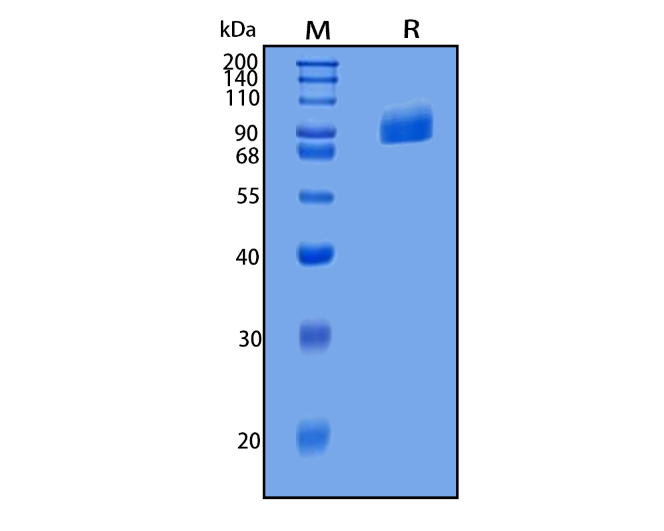
Greater than 90% as determined by SDS-PAGE.
-
蛋白编号
Q13451
-
表达区间
1-457aa
-
氨基酸序列
MTTDEGAKNNEESPTATVAEQGEDITSKKDRGVLKIVKRVGNGEETPMIGDKVYVHYKGKLSNGKKFDSSHDRNEPFVFSLGKGQVIKAWDIGV ATMKKGEICHLLCKPEYAYGSAGSLPKIPSNATLFFEIELLDFKGEDLFEDGGIIRRTKRKGEGYSNPNEGATVEIHLEGRCGGRMFDCRDVAF TVGEGEDHDIPIGIDKALEKMQREEQCILYLGPRYGFGEAGKPKFGIEPNAELIYEVTLKSFEKAKESWEMDTKEKLEQAAIVKEKGTVYFKGG KYMQAVIQYGKIVSWLEMEYGLSEKESKASESFLLAAFLNLAMCYLKLREYTKAVECCDKALGLDSANEKGLYRRGEAQLLMNEFESAKGDFEK VLEVNPQNKAARLQISMCQKKAKEHNERDRRIYANMFKKFAEQDAKEEANKAMGKKTSEGVTNEKGTDSQAMEEEKPEGHV
-
分子量
80kDa
-
内毒素
< 1.0 EU per μg protein as determined by the LAL method.
-
性状
Freeze-dried powder
-
缓冲液
PBS, pH7.4, 5% Trehalose
-
复溶方法
Reconstitute in ddH2O to a concentration of 0.1-0.5 mg/mL. Do not vortex.
- 个性化定制
-
稳定性测试
The thermal stability is described by the loss rate. The loss rate was determined by accelerated thermal degradation test, that is, incubate the protein at 37℃ for 48h, and no obvious degradation and precipitation were observed. The loss rate isless than 8% within the expiration date under appropriate storage condition.
-
保存条件 & 期限
Samples are stable for up to twelve months from date of receipt at -20℃ to -80℃. Store it under sterile conditions at -20℃ to -80℃. It is recommended that the protein be aliquoted for optimal storage. Avoid repeated freeze-thaw cycles.
-
运输条件
In general, recombinant proteins are supplied as lyophilized powder and shipped at ambient temperature. For bulk packages, the proteins are provided as frozen liquid and shipped with blue ice, unless otherwise requested by the customer.
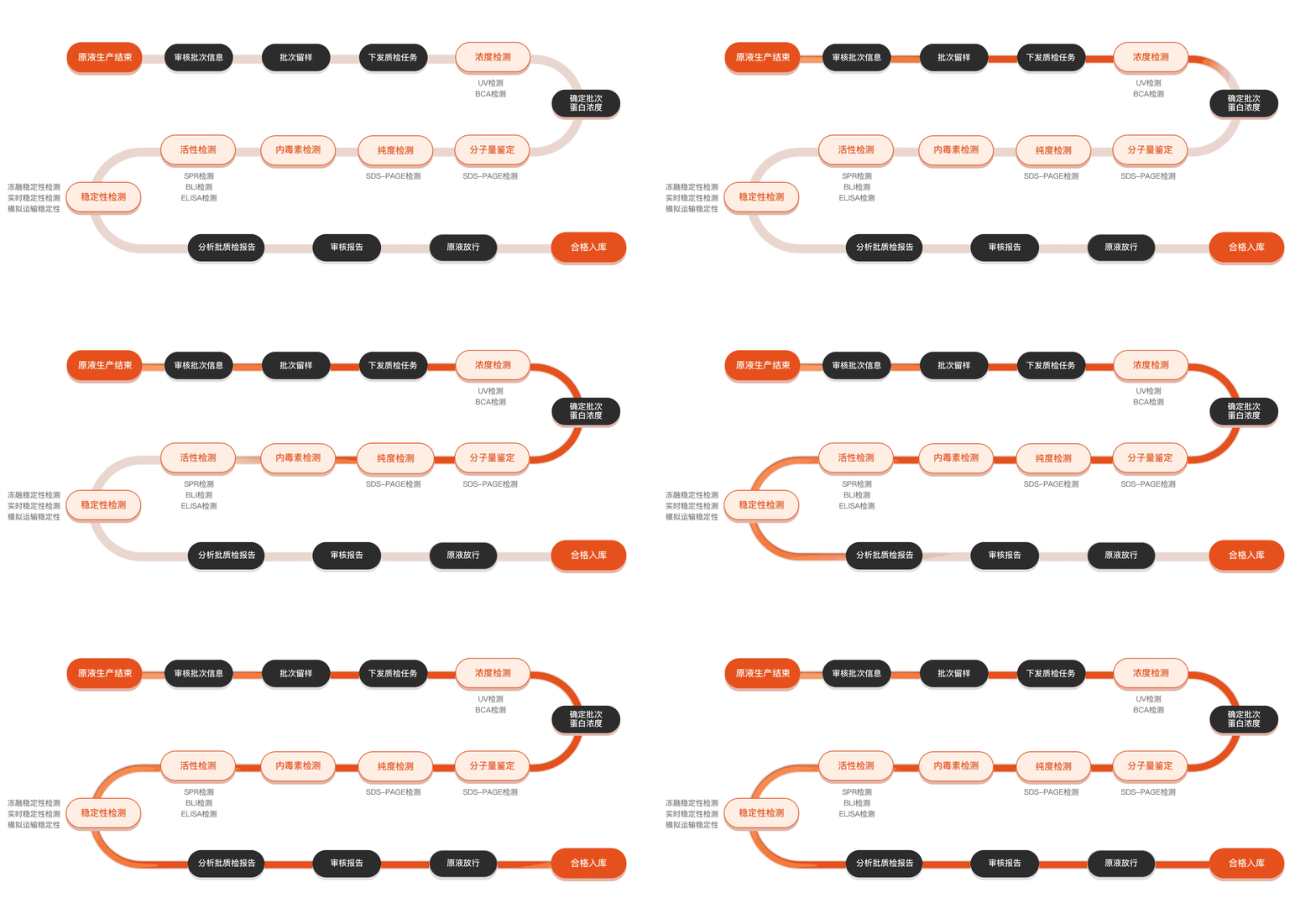
质检流程
相关产品
背景信息
FKBP5 is a member of the FK506-binding protein family, which plays a crucial role in the regulation of stress response pathways, particularly those mediated by glucocorticoids. Dysregulation of FKBP5 has been implicated in various psychological and physiological disorders, including depression, post-traumatic stress disorder (PTSD), and stress-related illnesses. Research has shown that genetic polymorphisms in the FKBP5 gene can influence individual susceptibility to these conditions by altering the response to stress hormones and their signaling pathways. The protein acts as a co-chaperone that modulates steroid hormone receptors, impacting their stability and transcriptional activity. Understanding the structure and function of FKBP5 is essential for developing targeted therapeutic interventions. Recombinant FKBP5 protein is generated to study its interactions with glucocorticoid receptors and to explore its role in stress response mechanisms at the molecular level. This research aims to elucidate the pathways through which FKBP5 contributes to stress resilience and vulnerability, potentially paving the way for novel treatments for stress-related disorders.